Early Look Edition · Available now

Vector Databases

From First Principles to Production RAG Systems

by Michael Hayden and Isaac Fisher Hayden Fisher Technologies, Inc.

A hands-on laboratory manual that takes a working software engineer from no knowledge of machine learning to designing, deploying and operating production retrieval-augmented generation systems. Every lab runs on your own hardware with open-source models. No cloud account, no API key, no per-token bill.

609pages
37chapters
25Dockerized labs
5vector databases
ChromaQdrantWeaviateMilvuspgvector PostGIS HNSW IVF Product quantization Hybrid retrieval Reranking Chunking Evaluation Geospatial RAG Docker Compose Open-source models

The thesis

Built for engineers who need this working in production

Not a survey of the field, and not a tutorial that stops at "hello world". Twenty-five laboratories that build a real system, one layer at a time.

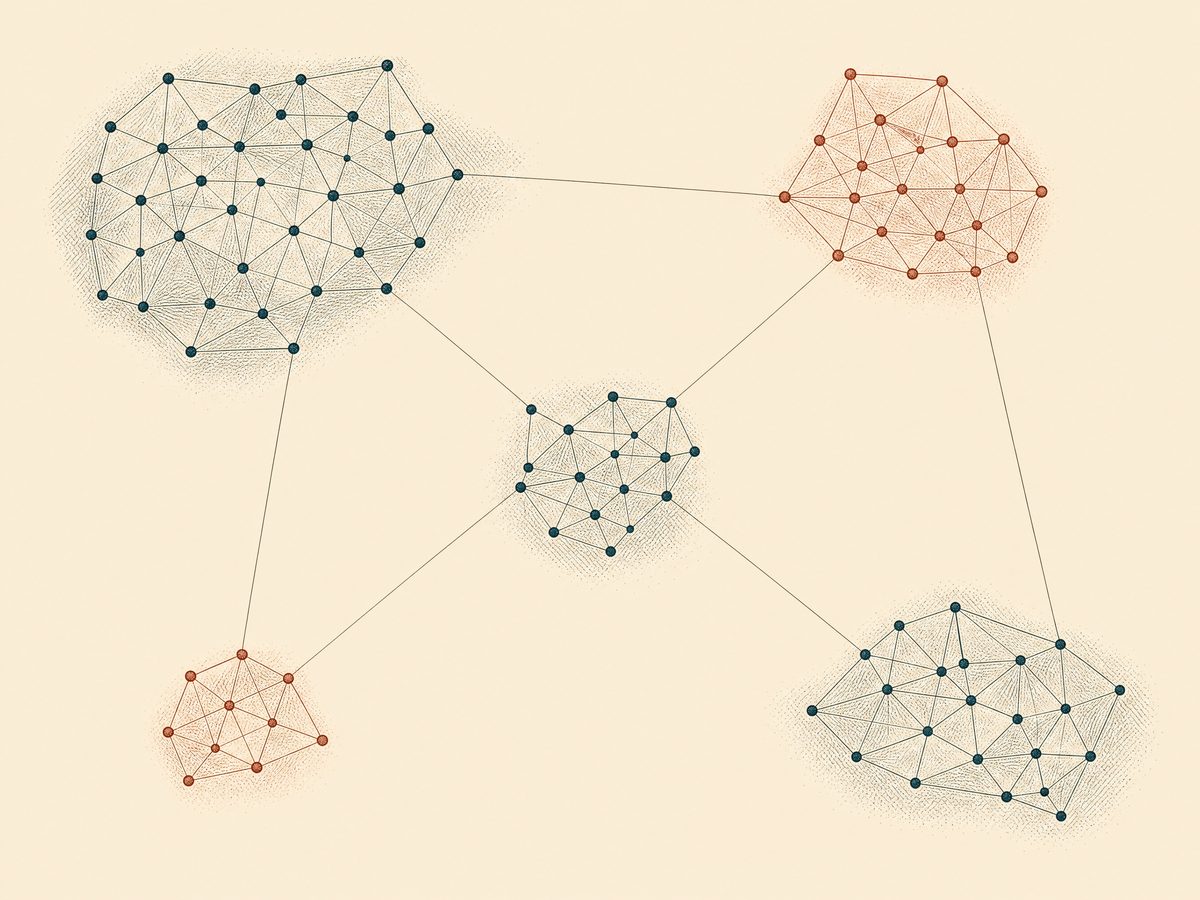
Five separate clusters of points, each a different density, joined by sparse edges

Five engines, one lens

Chroma, Qdrant, Weaviate, Milvus and pgvector, each examined through the same framework: architecture, storage, indexes, scaling, operations, and honest weaknesses. Then a decision framework, and the abstraction that makes them interchangeable.
An engraved instrument case whose point-and-edge constellation stops at the case walls

Runs on your machine

Every lab is Docker Compose plus open-source models. Nothing calls a hosted API. You can work through the entire book on a laptop, offline, and your data never leaves it.

An engraved machine turning loose sheets of paper into an ordered constellation of connected points

Production, not demos

Chunking that survives contact with real documents, hybrid retrieval, reranking, evaluation you can defend, performance engineering, and a capstone that assembles the whole book into one platform.

Try it

Search is a neighbourhood, not a lookup

Type anything below. Every chapter title becomes a vector, your query becomes a vector, and the two are compared by the angle between them. The nearest ones surface, scored. That is the whole shape of the operation, and the book spends twenty-five chapters making it rigorous, fast and measurable.

    Type anything. It scores every chapter title against your query.

    Being straight about it: this widget hashes character trigrams and takes a cosine. No model, no training, a few dozen lines. So it matches on letters, and you can watch it break: try the last query above. "Split a long document" is exactly what Chapter 5 is about, and the toy sends you to Qdrant, because the two share no letters. Closing that gap between spelling and meaning is what an embedding is for, and it is Chapter 2.

    Chapter 17, playable

    Watch a query find its neighbour

    Below is a proximity graph: a few hundred points, each joined to its nearest few, with a handful of long jumps thrown in. The search does not look at all of them. It enters at one door and keeps hopping to whichever neighbour is closer, until none of them is.

    Click anywhere in the graph to drop a query there, then compare the points it examined against a full scan of every point. That gap is the entire reason approximate nearest-neighbour indexes exist, and the price you pay for it is on the line underneath.

    • The entry point. Every search starts here.
    • The path taken, running cold to hot as it closes in.
    • Shown only when the walk settles on the wrong point: the true nearest neighbour it never reached.
    greedy walk
    0hops 0points examined 0points in the index

    Contents

    Six parts, built in order

    Each part depends on the one before it. Chapter titles are listed here; the chapters themselves are for customers.

    See every chapter

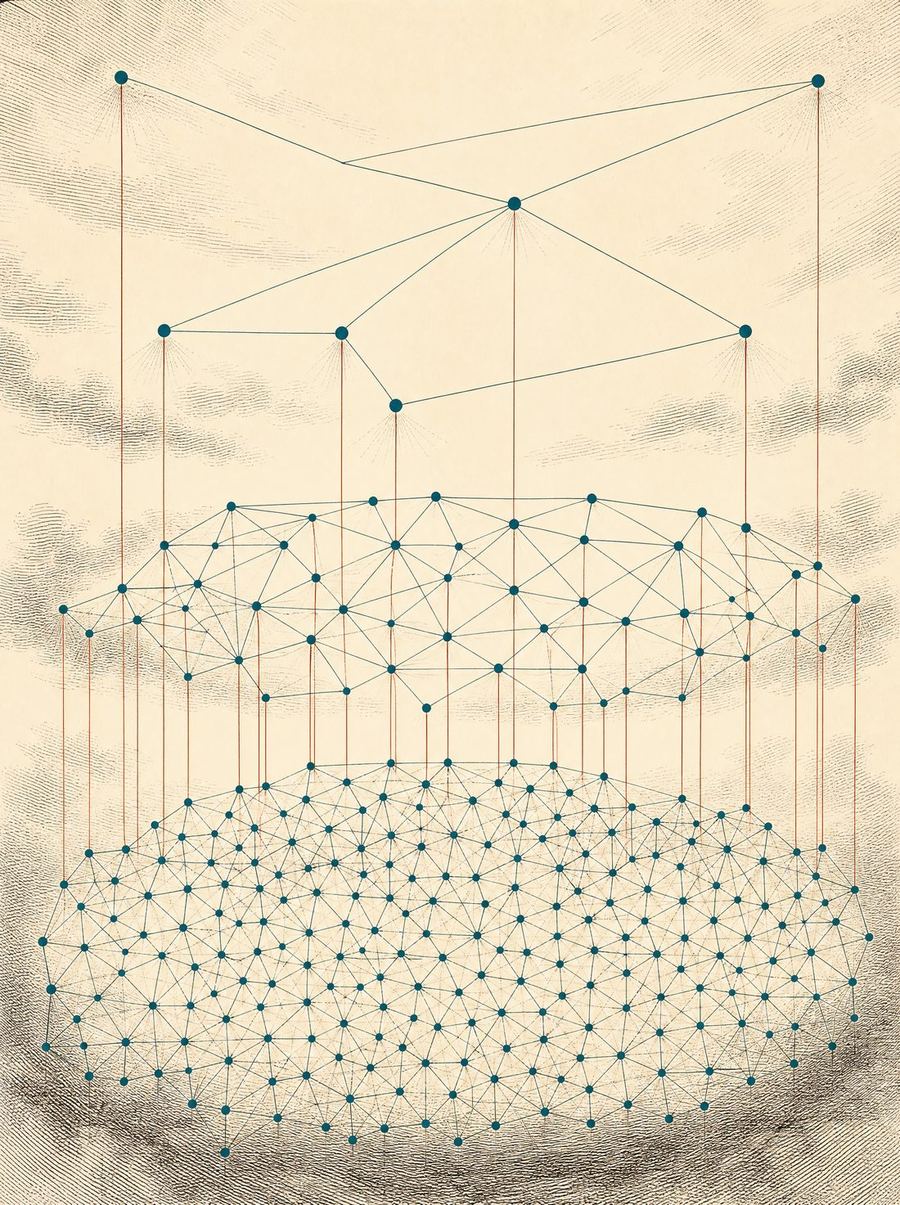
    A three-layer graph: a sparse top layer with long edges over a dense bottom lattice, the way a hierarchical index is built
    The shape of a hierarchical index: long edges on top for reach, a dense lattice underneath for accuracy. Chapter 17.

    Setup and front matter

    How to Use This Book {.unnumbered} · Setting Up the Laboratory

    Foundations

    What Is Semantic Search? · What Is an Embedding? · Visualizing Embeddings · Distance Metrics · Chunking Strategies

    Building a Vector Pipeline

    Building an Embedding Pipeline · Building a Local Search Engine · Your First RAG Pipeline · Metadata Filtering · Hybrid Search

    Understanding Vector Databases

    Chroma · Qdrant · Weaviate · Milvus · PostgreSQL and pgvector · Choosing a Vector Database

    Advanced Topics

    ANN Algorithms · Reranking and Multi-Stage Retrieval · Evaluating RAG Systems · Performance Engineering

    Spatial AI

    Vectors Meet Geometry · Geospatial RAG

    Production

    Production Architecture · Capstone: The AI Knowledge Platform

    Appendices

    Glossary {#sec:appendix-f}

    Setup and front matter

    Colophon {.unnumbered}

    Pricing

    Editions

    The Early Look is available now. The Professional and Instructor editions open later, and everything you buy today keeps working when they do.

    Professional Edition

    From 15 Nov 2026

    The book plus the private companion laboratory repository.

    –

    Pricing announced closer to release

    • Everything in Early Look
    • Private companion laboratory repository
    • 25 Dockerized laboratories
    • Datasets, notebooks and benchmark harnesses
    • Reference solutions
    • Instructor materials

    Instructor / Team Edition

    From 15 Dec 2026

    Professional, plus teaching materials and a team license.

    –

    Pricing announced closer to release

    • Everything in Professional
    • Instructor materials and slides
    • Assessment question bank
    • Multi-seat team license
    • Commercial training rights

    Prices are in US dollars and charged once. Payment is processed by Stripe; this site never sees or stores your card details.

    Measured, not estimated

    609 pages in the current release
    127909 words, counted at build time
    25 Dockerized laboratories
    v1.0 the release you would receive today

    Every number on this page is read from the imported release, so a claim here cannot drift from what the build actually produced.

    Questions

    Frequently asked

    The complete book, delivered now, while the companion laboratory repository is being finished. You get every chapter and appendix in the online reader and as a PDF, plus free updates to every future Early Look release. The companion repository is a Professional Edition entitlement and is not included.

    Yes, to both. The PDF is an ordinary PDF: not encrypted, no permission flags, no proprietary reader, and no internet connection needed to open it. Printing, searching, copying, annotating and screen readers all work. You bought a technical book; fighting you over it would be absurd.

    Honestly: nothing can stop a determined person, and we will not pretend otherwise. Your copy carries a discreet licence notice tied to your account, downloads are logged, and links expire. That is deterrence and traceability against casual resharing, not DRM. We would rather be straight with you about it than ship something that makes the book worse to use.

    Your Early Look access keeps working, including updates. The Professional Edition adds the private companion repository with the 25 laboratories, datasets, notebooks, benchmarks and reference solutions.

    The book text is copyrighted by Hayden Fisher Technologies, Inc. and is not open source. The companion laboratory code is distributed separately under the Apache License 2.0, which covers that code only. Full details.

    No. Every lab runs locally with Docker and open-source models.

    Eight arms, eight neighbourhoods

    Get the Early Look

    The complete book, now, and every Early Look update after it.

    See the editions Ask a question